- 5ft Deep Pool Layouts Homeowners Still Compare When Planning a More Usable Backyard
5ft Deep Pool Layouts Homeowners Still Compare When Planning a More Usable Backyard
5ft Deep Pool Layouts Homeowners Still Compare When Planning a More Usable Backyard
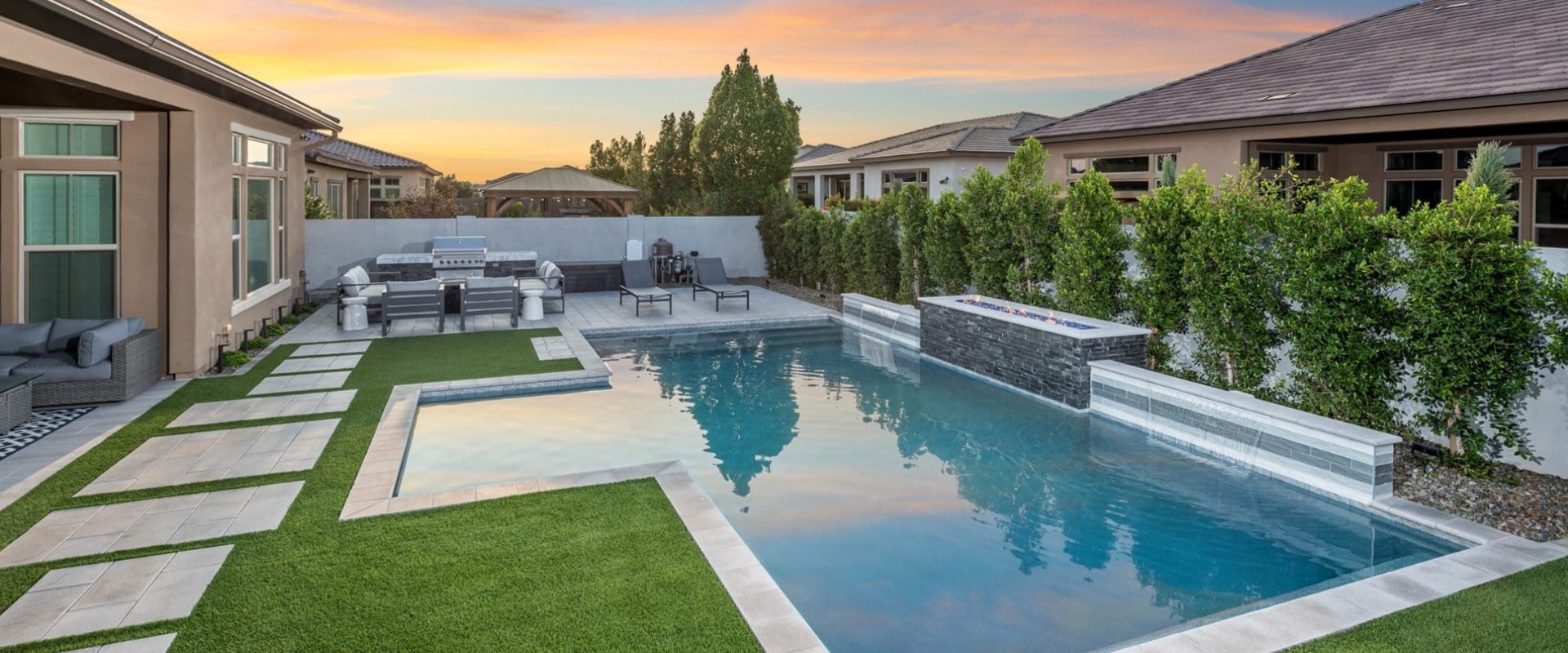

5ft Deep Pool Layouts Homeowners Still Compare When Planning a More Usable Backyard
Planning a backyard pool is one of the most exciting home improvement projects a homeowner can take on. But once the excitement settles, the practical questions start rolling in. How deep should the pool be? What shape makes the most sense for the space? Will a uniform depth serve the whole family, or does it make more sense to add shallow and deep sections? Among all the decisions to weigh, the 5-foot depth option keeps coming up time and again — and for good reason.
A 5ft deep pool sits in a sweet spot that suits casual swimming, light lap training, water aerobics, and family recreation without the cost or structural complexity of digging deeper. Below, we break down the pool layouts that homeowners most commonly compare when a 5-foot depth is on the table, and what each one brings to the backyard experience.
Why 5 Feet Has Become the Go-To Depth for Modern Backyards
Before diving into specific layouts, it helps to understand why 5 feet keeps appearing at the top of homeowner wish lists. A 5-foot depth is deep enough for most adults to stand comfortably while still being able to submerge and swim freely. It also eliminates some of the safety concerns that come with 8-foot or deeper pools, particularly for households with children or older adults.
From a construction standpoint, a uniform or near-uniform 5-foot depth requires less excavation and fewer structural reinforcements than deep-end configurations. That translates into lower construction costs, easier maintenance, and often a faster build timeline. For homeowners working with moderate-sized lots or tighter budgets, these advantages are hard to ignore.
The Most Popular 5ft Deep Pool Layouts Homeowners Compare
1. The Classic Rectangular Pool with Uniform Depth
The rectangular pool with a consistent 5-foot depth throughout is one of the simplest and most versatile layouts available. It looks clean, complements almost any architectural style, and makes the most of smaller or narrower lots.
- Best for: Lap swimming, fitness-focused homeowners, and contemporary home designs
- Typical dimensions: 12x24 ft to 16x32 ft
- Key advantage: Every inch of the pool is usable for both children and adults
- Consideration: No designated shallow play zone unless a step ledge or tanning shelf is added
Many homeowners who compare this layout eventually pair it with built-in benches or a sun shelf at one end to give younger swimmers a comfortable area without sacrificing the uniform depth throughout the main swimming zone.
2. The Freeform Pool with a Gradual Slope to 5 Feet
Freeform pools mimic natural water shapes — curved edges, organic contours, and irregular outlines that blend seamlessly into landscaped backyards. When designed to reach a maximum depth of 5 feet, they offer a gradual entry experience that many families find more welcoming than an abrupt drop-off.
- Best for: Resort-style aesthetics, tropical landscaping themes, and family-oriented spaces
- Typical dimensions: Highly variable based on lot size and shape
- Key advantage: Feels more like a natural environment, especially when paired with waterfalls or rock features
- Consideration: More complex to build and maintain than geometric shapes
The freeform layout at 5 feet is particularly popular in warmer climates where the pool doubles as a central social hub. Homeowners in these regions often cite the natural look and shallow-to-5-foot progression as the ideal balance between aesthetics and functionality.
3. The L-Shaped Pool with Dual-Zone Depth
The L-shaped pool is a smart solution for homeowners who want two distinct zones within a single pool footprint. One arm of the L typically serves as a shallow play area for children, while the other reaches 5 feet for adult swimming. This layout is especially popular with families at different life stages.
- Best for: Mixed-age households, entertaining spaces with poolside seating
- Typical dimensions: Varies widely; one section commonly 10x20 ft and the other 10x15 ft
- Key advantage: Two functional zones without needing to build two separate water features
- Consideration: Requires more square footage and a larger budget than single-shape designs
4. The Plunge Pool or Compact Rectangular Design Maxed at 5 Feet
For homeowners with limited yard space, a compact plunge pool capped at 5 feet delivers tremendous value. These pools typically range from 10x15 ft to 12x20 ft and are designed for relaxation, hydrotherapy, and low-impact exercise rather than lap swimming.
- Best for: Small backyards, urban lots, vacation properties
- Key advantage: Lower construction and maintenance costs while still delivering a true swimming experience
- Consideration: Not ideal for parties or families who want generous open swimming space
5. The Roman or Grecian Pool with Shallow Entry Steps Leading to 5 Feet
These classic geometric designs feature curved or cut corners and wide entry steps that gradually lead swimmers into the pool. When the main basin is set at 5 feet, the Roman or Grecian style creates an elegant, approachable feel that suits formal landscaping designs and traditional home exteriors.
- Best for: Traditional or Mediterranean home styles, formal garden settings
- Key advantage: Visually striking from above; steps provide gradual depth entry
- Consideration: Steps reduce overall swimming area, so total pool size should be adjusted accordingly
What to Think About When Comparing These Layouts
Yard Size and Shape
Before falling in love with any layout, homeowners should map out their available space carefully. A freeform pool needs more irregular space to look natural, while a rectangular design works efficiently in tight or narrow lots. Always account for required setbacks from fences, structures, and property lines, which vary by municipality.
How the Pool Will Be Used Day-to-Day
Think honestly about who will be in the pool most often. A family with toddlers will benefit from a design that includes a shallow wading area, even if the main body reaches 5 feet. A homeowner focused on fitness will want a long, uninterrupted lane. Social entertainers may prioritize wide steps, benches, and a design that looks beautiful from the patio.
Budget and Long-Term Costs
Simpler geometric shapes are almost always less expensive to build than freeform or multi-zone designs. However, features like sun shelves, in-pool seating, and decorative tile can increase value without dramatically inflating depth-related construction costs. Uniform depths also tend to make cleaning and chemical balancing more predictable over time.
Local Climate and Seasonal Use
In regions where pools are used year-round, the investment in a larger or more complex layout makes strong financial sense. In areas with shorter swim seasons, homeowners often gravitate toward lower-maintenance designs — and a straightforward 5-foot rectangular or plunge pool layout often wins that comparison.
Final Thoughts on Choosing the Right Layout
There is no single best layout for a 5-foot pool. The right choice depends on the homeowner's lifestyle, the size and shape of the lot, the family's needs, and the aesthetic they want to create. What makes the 5-foot depth so appealing across all of these layout options is its flexibility — it works beautifully whether you are planning a sleek lap pool, a resort-style freeform oasis, or a compact urban plunge pool.
The layouts covered here represent the ones homeowners most commonly put side by side when they start planning seriously. Understanding what each one offers — and what it requires — makes that comparison much easier to navigate. Whether you are leaning toward the timeless rectangular design or something more organic and resort-inspired, starting with the right depth gives your entire design process a solid, practical foundation.