- Smart Home RF Engineering: Why Wireless Design Matters for SoCal Renovations
Smart Home RF Engineering: Why Wireless Design Matters for SoCal Renovations
Why professional RF engineering is becoming essential for Southern California home renovations — from whole-home Wi-Fi to smart home automation and outdoor living.
The Wireless Reality of Modern Home Renovation
Southern California homeowners spend an average of $75,000 to $150,000 on major home renovations, according to data from the National Association of Home Builders. They invest in designer kitchens, spa-like bathrooms, and seamless indoor-outdoor living spaces that take advantage of the region's enviable climate. But an increasing number of these expensive renovations share a frustrating common flaw: the wireless connectivity can't keep up with the smart home technology the renovation was designed to showcase.
The problem isn't the internet service — Southern California has some of the best broadband infrastructure in the country, with Spectrum, AT&T Fiber, and Google Fiber competing across much of the region. The problem is what happens after the signal enters the home. Wi-Fi routers tucked in closets, access points placed based on convenience rather than coverage analysis, and smart home devices scattered across dozens of competing wireless protocols create an electromagnetic environment that's chaotic at best and non-functional at worst.
This is where RF engineering enters the renovation conversation. Professional wireless design — applying the same engineering discipline to home connectivity that architects apply to structural design — transforms a collection of wireless devices into a cohesive system that actually works. And for the increasingly connected Southern California home, it's becoming as essential as plumbing and electrical design.
Why SoCal Homes Present Unique RF Challenges
Southern California's architectural character creates wireless challenges that are distinct from other regions. The Spanish Colonial Revival and Mediterranean styles that dominate much of the housing stock feature thick stucco exterior walls — often with wire mesh lath that acts as a partial Faraday cage, attenuating Wi-Fi signals by 10-15 dB as they try to penetrate from inside to outside. For homes built before 2000, concrete block construction and plaster-over-lathe interior walls add additional signal barriers that modern drywall construction doesn't present.
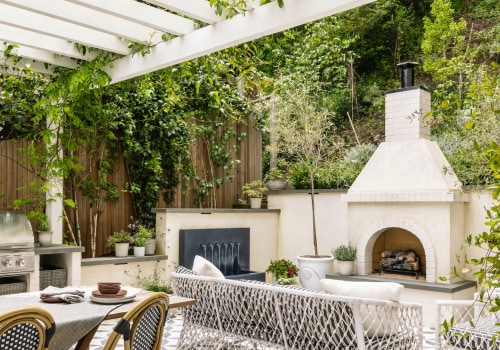
The region's emphasis on outdoor living creates another RF design challenge. Southern Californians expect their Wi-Fi to work seamlessly on the patio, by the pool, in the outdoor kitchen, and throughout the yard — environments where indoor access points struggle to provide adequate coverage. Extending reliable wireless connectivity to outdoor spaces requires weather-rated access points, directional antennas aimed to cover specific areas, and careful power management to avoid interfering with neighbors' networks.
Multi-story hillside homes — common in neighborhoods from La Jolla to the Hollywood Hills — present perhaps the most challenging RF environments. Signal propagation between floors is heavily attenuated by concrete foundations and structural elements, while the vertical topology means that access points on one level may have clear line-of-sight to distant outdoor areas while being completely blocked from rooms directly above or below. These homes almost always require a professional RF assessment to achieve whole-home coverage.
The Smart Home Device Ecosystem Challenge
A fully equipped smart home in 2026 might include 80 to 150 connected devices: smart lighting (Lutron, Philips Hue), motorized window shades (Hunter Douglas PowerView), climate control (Ecobee, smart HVAC zoning), security cameras (Ring, Arlo, Verkada), door locks (Yale, August), whole-home audio (Sonos), irrigation controllers (Rachio), pool equipment (Pentair), garage door openers (myQ), and dozens of other gadgets competing for wireless bandwidth.
These devices use a bewildering mix of wireless protocols. Wi-Fi (2.4 GHz and 5 GHz) handles the bandwidth-heavy devices like cameras and streaming speakers. Bluetooth and Bluetooth Low Energy manage proximity-based connections. Zigbee (802.15.4 at 2.4 GHz) and Z-Wave (sub-GHz ISM band) handle the mesh networking for lights, sensors, and switches. Thread — the newest protocol, backed by Apple, Google, and Amazon — operates on the same 2.4 GHz band as Zigbee and Wi-Fi, adding yet another competitor for spectrum.
Without careful RF planning, these protocols interfere with each other. Zigbee channels 15, 20, 25, and 26 overlap with Wi-Fi channels 1, 6, and 11 in the 2.4 GHz band. When a Wi-Fi access point is transmitting at full power on a channel that overlaps with the Zigbee mesh network controlling your lights, the Zigbee devices experience packet loss and increased latency — manifesting as lights that respond slowly, fail to respond, or randomly turn on and off. Professional RF engineering assessment identifies and resolves these protocol conflicts before they become daily annoyances.
Whole-Home Wi-Fi: Beyond the Mesh Marketing
Consumer mesh Wi-Fi systems — Eero, Google Nest WiFi, Orbi — have improved home wireless significantly compared to single-router setups. But they have fundamental limitations that become apparent in larger or architecturally complex homes. Mesh nodes communicate with each other wirelessly, which means the backhaul link between nodes consumes a significant portion of available bandwidth. Each hop in the mesh reduces effective throughput, and the automatic placement algorithms can't account for the specific RF characteristics of your home's construction materials and layout.
A properly designed whole-home Wi-Fi system starts with wired backhaul — Ethernet cables pulled to each access point location during the renovation, providing full-bandwidth connections that don't compete with client traffic. Access point locations are determined by RF analysis of the floor plan and construction materials, not by which outlet happens to be convenient. And the access points themselves are enterprise-grade hardware — Ruckus, Aruba, or UniFi — with configurable power levels, external antenna options, and management software that provides real-time visibility into network performance.
The cost difference between a consumer mesh system ($300-$600) and a professionally designed enterprise-grade deployment ($3,000-$8,000 installed) is significant but small in the context of a $100,000+ renovation. And the performance difference is dramatic — not just in raw speed, but in reliability, roaming smoothness, and the ability to support dozens of simultaneous device connections without degradation.
Pre-Wire Planning: The Renovation Advantage
The single greatest advantage of addressing wireless infrastructure during a renovation rather than after is access to walls, ceilings, and conduit paths. Pulling Ethernet cable and low-voltage wiring to access point locations is straightforward when walls are open; doing the same work in a finished home requires cutting drywall, fishing cables through insulation, and patching and painting — tripling or quadrupling the installation cost.
Smart renovation wireless planning includes: dedicated Cat6A runs to every access point location, additional runs to ceiling locations for future access point additions, low-voltage wiring to motorized shade pockets and in-wall display locations, Power-over-Ethernet capability at all access point locations (eliminating the need for local power outlets), and conduit to outdoor access point mounting locations with proper weatherproof junction boxes.
Experienced renovation contractors in Southern California increasingly partner with wireless design specialists to incorporate RF planning into the pre-construction phase. This collaboration ensures that access point locations are coordinated with the interior designer (no visible hardware in aesthetic-sensitive areas), the electrician (PoE switch placement and power requirements), and the low-voltage contractor (cable routing and termination specifications).
Outdoor Wireless: Living the SoCal Lifestyle
Southern California's climate means outdoor spaces are used year-round, and the expectation of seamless outdoor connectivity has gone from luxury to necessity. Streaming music by the pool, taking video calls on the patio, monitoring outdoor security cameras, and controlling landscape lighting and irrigation all depend on reliable outdoor Wi-Fi coverage.
Designing outdoor wireless coverage requires different considerations than indoor deployment. There are no walls to contain the signal, which means access points designed for outdoor use must balance coverage area against interference with neighbors. Directional antennas — sector antennas that focus coverage in a specific direction rather than radiating omnidirectionally — are essential for covering outdoor areas without blasting signal into adjacent properties.
Environmental factors also matter. The Santa Ana winds that sweep through Southern California carry dust and debris that can degrade outdoor antenna performance over time. Marine layer fog in coastal communities like Carlsbad, Del Mar, and Malibu introduces moisture that slightly attenuates higher-frequency signals. And the intense Southern California sun creates thermal management challenges for outdoor electronic equipment — proper mounting location and ventilation prevent premature equipment failure.
The ROI of Professional Wireless Design
For homeowners investing six figures in a renovation, the return on professional wireless design is measured in daily quality of life and property value. A home with enterprise-grade wireless infrastructure — documented, properly designed, and reliably performing — commands a premium in the Southern California real estate market, where tech-savvy buyers expect connectivity to match the caliber of the rest of the home.
Real estate agents in markets like Rancho Santa Fe, Newport Coast, and Pacific Palisades report that smart home infrastructure — including professional wireless design — has joined ocean views and chef's kitchens as a feature that influences buying decisions at the luxury level. A $5,000 investment in wireless design during a renovation protects and enhances a multi-million-dollar asset.
For homeowners planning a renovation that includes smart home technology, the path forward is clear: engage an RF engineering professional during the design phase, before walls close and options narrow. The result is a home where the technology works as seamlessly as the architecture — which is exactly what a Southern California renovation should deliver.